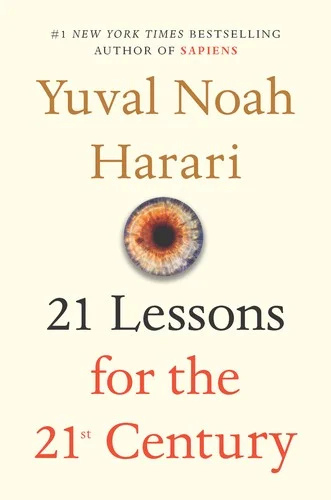
Why read it — This is Harari in essay mode: education, work, truth, nationalism, immigration, war, meditation—topics that refuse to stay in one academic lane. The through-line is competence under uncertainty: what to teach children when the job market reinvents itself; how to parse reality when attention is the scarcest input; what secular resilience looks like when old collective stories wobble. Uneven chapter to chapter, but the book’s value is range as a diagnostic—it mirrors how modern problems actually arrive, bundled.
Cross-domain lens — Technology, society, and geopolitics are the tagged lenses, and the stack shows up as coupling: AI and biotech change what states can do; platforms change what publics can see; supply chains and climate change what “security” means. The human layer—emotion, identity, mental hygiene—is where Harari lands most often, sometimes sliding from analysis to self-help. The economic layer is thinner than it should be for questions this large, which matters when prescriptions bump into power and distribution.
Stack Takeaway
- The 21st century is less a list of “issues” than a bandwidth crisis: too many layers updating at once for any single ideology to parse cleanly.
- Personal clarity practices are not a substitute for institutional design—but without individual sensemaking, institutions drift on autopilot fueled by panic.