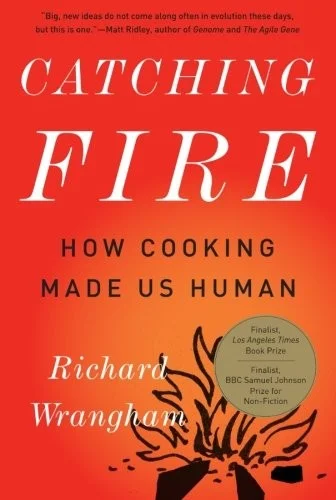
Why read it — Wrangham’s thesis is blunt and well-evidenced: cooking didn’t follow human evolution, it drove it. The ability to externalize digestion through fire freed up the metabolic energy that grew our brains and shrank our guts. This is a physical-layer argument about the relationship between energy transformation and cognitive capacity, and it forces a rethink of where technology ends and biology begins. If a tool can reshape the genome over millennia, the boundary between the physical and human layers of the stack is much more porous than it looks.
Cross-domain lens — The book is biology and evolutionary anthropology, but the cultural layer is inseparable: cooking created the hearth, the hearth created structured social time, and structured social time is arguably the scaffolding on which language and culture were built. The energy argument is the most underappreciated: cooking is a form of energy pre-processing, and access to that pre-processed energy is still one of the sharpest divides in human health and economic outcomes globally. The book largely stops at prehistory, leaving open the question of how industrial food processing—an extension of the same externalizing logic—has produced a different set of trade-offs.
Stack Takeaway
- Technology doesn’t just extend human capability — at sufficient depth, it restructures the biological substrate itself; the smartphone era is an early chapter of a very long story.
- Energy pre-processing (cooking, refining, computation) is a consistent lever of human development: whoever controls the transformation controls the downstream outcomes.