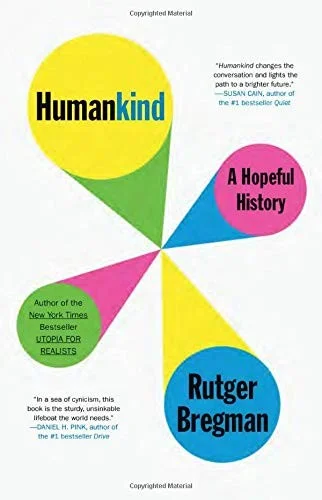
Why read it — Much of what we treat as realism about people is really a story about institutions. Bregman retells episodes that supposedly proved our brutishness—the classics, the headlines, the management manuals—and shows how often the evidence was thin, staged, or read backward from a theory that needed villains. The book is less “everyone is nice” than “defaults matter”: assume the worst and you design for it; assume cooperation is fragile but normal and you get different rooms, rules, and outcomes. After it, cynicism reads less like wisdom and more like a design input you did not mean to specify.
Cross-domain lens — History and journalism supply the case files, but the through-line is human systems: what we remember, what we dramatize, and what we encode into law, hierarchy, and everyday control. The stack connection is economic and institutional as much as psychological: incentives and accountability structures turn latent decency or latent fear into measurable behavior. Bregman is stronger on narrative correction than on hard trade-offs (scarcity, power, coordination at scale), yet the gap itself is useful—it marks where “hopeful history” must hand off to harder political economy.
Stack Takeaway
- Cynical models of human nature often function as self-fulfilling infrastructure—they license control regimes that elicit the very aggression they claim to prevent.
- If you build products, teams, or policy, your implicit theory of people is not metaphysics; it is a parameter in the system you are shipping.