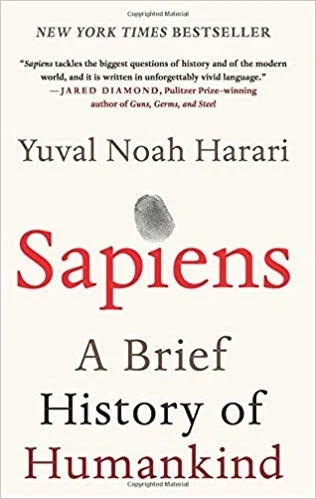
Why read it — Harari’s move is to treat “history” as the biography of shared fictions—gods, money, nations, corporations—and the institutions they enable at scales no kin group could hold alone. The book is deliberately sweeping; specialists will nitpick. For a stack reader, the useful part is the compression: how symbolic coordination turned into agriculture, empire, science, and markets without requiring everyone to personally verify the story.
Cross-domain lens — History and cognition meet institutions: language and myth as networking protocols; bureaucracy and law as persistence layers. The economic thread is explicit—credit, trust, and abstract value. The physical layer is there (agriculture, disease, energy) but thinner than the cultural scaffolding; Harari is clearer on why large societies synchronize than on material constraints.
Stack Takeaway
- Large-scale cooperation is an information architecture problem first; violence and trade ride on what people can mutually pretend is true.
- When the shared fiction frays faster than a new one stabilizes, you get the political volatility we now treat as normal—it is a protocol migration, not just a mood.