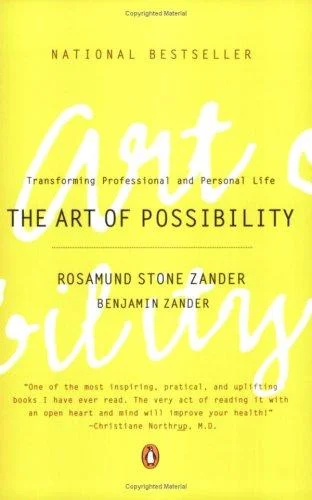
Why read it — Ben Zander is a conductor; Roz Zander is a therapist. The combination produces a book about leadership that is not about authority but about the conditions under which people give their best. The core claim is that most creative and collaborative work happens inside a hidden framework of scarcity and competition that nobody chose—and that reframing the game changes what is available. This is less a self-help book than a systems intervention: if you change the score, you change what the players do.
Cross-domain lens — The book sits at leadership and creativity, but its deepest current is cognitive: the “calculating self” that optimizes for survival versus the “central self” that contributes beyond what the situation seems to require. That distinction maps onto the tension between incentive design and intrinsic motivation in economics and organizational theory. The cultural layer surfaces in the orchestra metaphor—an ensemble is one of the few human institutions where hierarchy (conductor) and radical interdependence (every player listening to every other) must coexist in real time. The book is thinner on the structural conditions that make possibility sustainable rather than episodic.
Stack Takeaway
- Most institutional creativity failures are framing failures: the operating rules of the room determine what contributions are visible, not the capability of the people in it.
- “Giving an A” is not naïve positivity — it is a deliberate system change that shifts the feedback loop from evaluation to contribution.