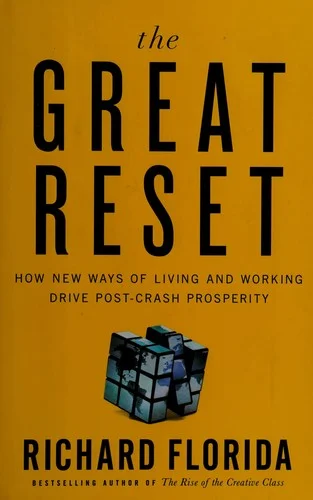
Why read it — Florida’s argument is that the shocks after 2008 were not a cyclical dip but a reset in how cities, work, and talent sort themselves. The creative-class story he told earlier becomes a liability when the geography of opportunity tightens and the social contract around “skills = security” frays. Read it as a map of who gains when economic gravity shifts—and what “reset” means for anyone building products, teams, or policy on top of urban systems.
Cross-domain lens — Urban form, labor markets, and housing are the visible layers; underneath is a stack of institutions (education, mobility, zoning) that encode who can afford to live where the work is. The digital layer is implicit: remote work and platform labor partially decouple wages from place, but they do not remove the political economy of land and infrastructure. Florida is stronger on diagnosis than on distributional fixes, which is where the economic critique usually lands.
Stack Takeaway
- A “reset” is not an event but a re-parameterization of the same physical and institutional substrate—cities don’t empty randomly; incentives and constraints move people.
- Treating creativity as a mobile asset class without redesigning who captures land value leaves the stack half-updated and politically unstable.