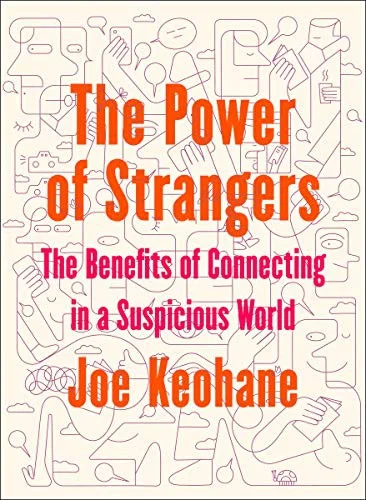
Why read it — Most writing about social fragmentation focuses on what divides us. Keohane inverts the question: what did humans historically gain from talking to strangers, and what do we lose when we stop? The research he assembles shows that weak ties and stranger contact are not pleasant extras—they are a load-bearing element of psychological well-being and civic health. In a world where digital infrastructure increasingly routes us toward the already-known, this is a design diagnosis as much as a social one.
Cross-domain lens — The book is psychology and society, but it reads as an argument about network topology. Strong ties give depth; weak ties and stranger contact give reach, novelty, and the unexpected information that strong-tie bubbles filter out. The trust layer is critical: trust of strangers is not naive—it is a learned social technology that cities, markets, and democratic institutions depend on, and it atrophies without practice. The digital layer is where the stakes become sharpest: platform design that maximizes engagement by clustering the familiar is systematically degrading the social infrastructure that loose-tie contact builds. Keohane doesn’t fully pursue the economic incentives behind that design, but the implication is clear.
Stack Takeaway
- Stranger contact is not a social luxury — it is the mechanism by which social systems maintain diversity, resilience, and access to information outside the local bubble.
- Digital platforms optimized for engagement are, structurally, machines for eliminating productive randomness from social life.