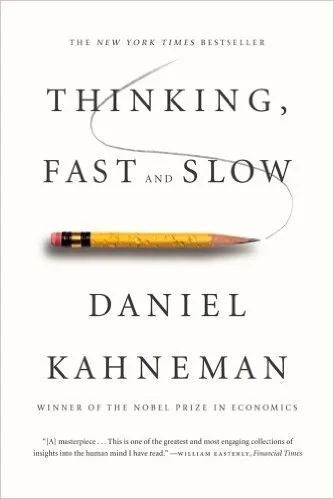
Why read it — We narrate decisions as if they were authored by a single, coherent self. Kahneman dismantles that story empirically — not to mock intuition, but to map where it is brilliant, where it is fragile, and where slow deliberation is the only honest repair kit. The book’s lasting value is turning a vocabulary of biases into a practice of when to trust a feeling and when to reach for a checklist.
Cross-domain lens — At the human layer, System 1 and System 2 are a workable fiction for attention, association, and effort. Those mechanisms ramify into the economic layer (markets, pricing, risk) and the digital layer (feeds, defaults, anything optimized for clicks). Kahneman is clearest where individual judgment meets institutional design: the same heuristic that saves a hunter-gatherer can bankrupt a portfolio manager if the environment’s feedback loops are delayed or polluted.
Stack Takeaway
- Many “irrationalities” are rational locally — fast, cheap heuristics tuned to environments we no longer inhabit or that others have incentive to manipulate.
- Good design and good policy treat cognitive limits as constants, not moral failures — and build redundancy, measurement, and slowness where the stakes outrun intuition’s warranty.