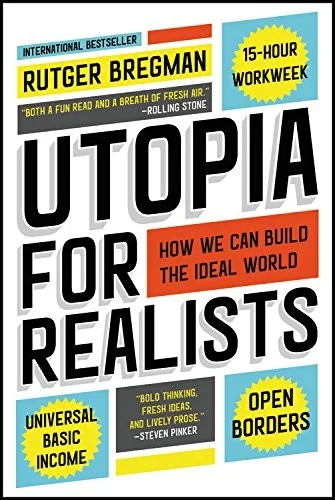
Why read it — Bregman wants to reclaim utopia from cynics without retreating into fantasy: basic income, shorter weeks, open borders as empirical conversations, not purity tests. The tone is polemical, the evidence mixed in places, but the underlying provocation is systems-level—most “realism” in politics is really status-quo anchoring dressed as maturity. You read it to stress-test what you treat as impossible by default.
Cross-domain lens — Economics and policy are explicit; the human layer is morale and cooperation under abundance narratives; the institutional layer is what actually changes tax, migration, and labor law. Digital platforms appear mostly as distractions from material constraints—Bregman is not a tech book, which is refreshing. The gap is implementation politics: winning an argument in print is not the same as building coalitions that survive contact with budgets.
Stack Takeaway
- Many “utopian” ideas fail in the wild not because they are naive but because legacy incentive stacks were built to stabilize yesterday’s scarcity.
- Optimism without institutional engineering is vibes; pessimism without alternatives is also vibes—both avoid the hard layer of redesigning who bears risk.